


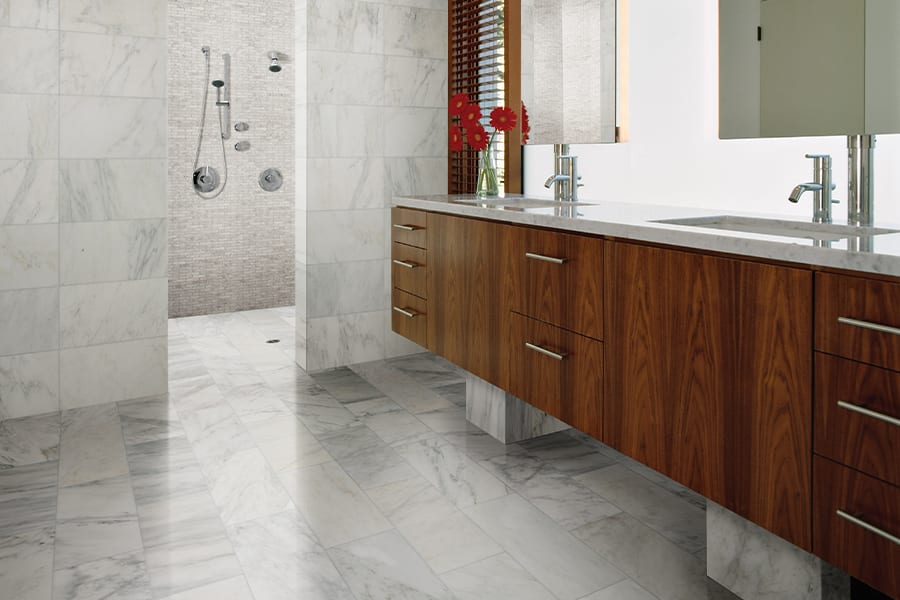
Natural stone tile can turn an ordinary bathroom into a warm, refined space. No two pieces are exactly alike, giving your floor natural character that manufactured materials try to recreate. But bathrooms also have water, humidity, and frequent foot traffic. That means choosing stone based on looks alone is not enough. Some options are better suited for bathroom floors than others. Understanding the differences can help you balance beauty, durability, traction, and maintenance.
What is the best natural stone flooring for bathrooms?
Slate, granite, marble, travertine, and limestone can all work in bathrooms, but the best choice depends on your priorities.
For many homeowners, slate tile is one of the best all-around natural stone flooring options for bathrooms because it is durable and naturally textured. Granite tile is another strong choice when durability is a priority. Marble flooring is ideal for people who want a more luxurious appearance.
The finish also matters. Highly polished stone may become slippery when wet, while honed, brushed, tumbled, or textured finishes can offer better traction.
Is slate a good choice for bathroom flooring?
Yes. Slate tile is a popular bathroom flooring choice because it combines durability with a distinctive natural appearance.
Its textured surface can provide better traction than highly polished stone, making it worth
considering around tubs, showers, and sinks. Slate tile comes in colors ranging from charcoal and gray to green, rust, brown, and other earthy shades.
Quality can vary between slate products. Choosing high-quality stone and having it properly installed and sealed can make a major difference in long-term performance.
Is marble flooring a good choice for bathrooms?
Marble flooring is one of the most recognizable choices for a luxury bathroom. Its natural veining and color variation create an elegant appearance that is difficult to duplicate.
Marble can be used for bathroom floors, shower walls, and accent areas for a coordinated design.
However, marble requires more care than some alternatives. It is porous and can be vulnerable to staining, scratching, and etching. Polished marble may also become slippery when wet. Honed marble is often a better option for bathroom floors because it provides a softer finish with more traction while maintaining marble's classic appearance.
Can you use granite tile in a bathroom?
Yes. Granite is one of the hardest and most durable natural stone tiles used in homes, making it an excellent choice for bathroom flooring that needs to withstand regular use.
Granite comes in many colors and patterns. Depending on the product, it can create anything from a subtle neutral floor to a dramatic focal point.
Granite should be properly installed and may require sealing. For bathroom floors, consider the surface finish carefully to avoid choosing an unnecessarily slippery surface.
Is travertine tile a good choice for bathroom floors?
Travertine tile has a warm, timeless appearance that works well in traditional, Mediterranean, rustic, and spa-inspired bathrooms. Its cream, beige, tan, and earthy colors create an inviting look.
Tumbled or honed travertine is generally more practical for bathroom flooring than a highly polished finish.
Travertine is porous, so proper sealing and routine maintenance are important for protecting it from moisture and stains. For people who love its distinctive character, that additional maintenance may be worthwhile.
Can limestone tile be used for bathroom flooring?
Yes. Limestone tile is a good option for homeowners who prefer a soft, understated natural look. Its neutral colors work with many bathroom styles.
However, limestone is generally softer and more porous than granite. It requires proper sealing and stone-safe cleaning products to maintain its appearance.
Natural stone tile varies by product, so talk with a knowledgeable flooring professional about whether a particular limestone is suitable for your bathroom.
Does natural stone bathroom flooring need to be sealed?
Most natural stone flooring benefits from sealing because stone can be porous. A quality sealer helps reduce moisture absorption and staining.
How often your floor needs resealing depends on the stone, sealer, traffic, and bathroom conditions. Some stones are more porous than others.
Remember, sealing does not make natural stone maintenance-free or completely waterproof. Clean spills promptly and use cleaning products recommended for your specific stone.
How do you choose natural stone flooring for a bathroom?
Start with more than color. Consider where the stone will be installed, how much moisture it will encounter, how busy the bathroom is, and how much maintenance you are willing to perform.
Pay close attention to texture and finish. Bathroom flooring should balance appearance with practical traction underfoot.
Also consider natural variation. Differences in veining, shading, texture, and pattern are expected with natural stone. That uniqueness is part of its appeal.
Seeing samples in person can help you determine how different stones coordinate with your cabinets, countertops, shower tile, fixtures, and lighting.
Visit us for stunning natural stone tiles in Livermore, CA
Kraftician Design Surfaces is a family-owned and operated resource for natural stone tile and slabs, porcelain and ceramic tile, quartz slabs, glass, engineered hardwood, LVT, and other surfaces. The team focuses on extensive product knowledge, quality, integrity, and reliable service for homeowners and industry professionals.
With high-quality products, in-house design consultants, a one-stop-shop approach, and same-day appointments available, Kraftician Design Surfaces can make choosing bathroom materials easier.
Our showroom in Livermore, CA, serves Livermore, CA, Pleasanton, CA, San Ramon, CA, Dublin, CA, and Sunol, CA. Get in touch with us today!

